Ethnic Rhinoplasty In Vancouver


Your Nose. Your Features. Your Identity.
Your nose is one of the most defining features of your face. Rhinoplasty should enhance its appearance while preserving the characteristics that make you uniquely you.
Ethnic rhinoplasty is not about creating a particular type of nose. It is about understanding the unique anatomy, proportions, skin characteristics, and aesthetic goals of each individual patient.
Dr. Anali Dadgostar takes a highly personalized approach to ethnic rhinoplasty, carefully considering your facial structure, nasal anatomy, ethnic background, and—most importantly—what you want to achieve.

Personalized. Precise. Natural.

Ethnic rhinoplasty refers to rhinoplasty performed with particular consideration for a patient's ethnic background and individual anatomical characteristics.
There is no single “ethnic nose.”
Patients of the same ethnic background can have dramatically different nasal anatomy, facial proportions, skin thickness, cartilage structure, and aesthetic preferences. For this reason, ethnic rhinoplasty cannot be approached with a standardized technique.
Dr. Dadgostar evaluates the nose as part of the entire face. She considers the relationship between the nose, eyes, cheeks, lips, chin, and overall facial proportions when developing your surgical plan.
Some patients may want subtle refinement while maintaining many of their existing nasal characteristics. Others may want a more significant change. Some may be primarily concerned with the bridge or tip, while others may want to address nasal width, nostril shape, asymmetry, or breathing.
There is no single definition of the “ideal” nose.
The ideal nose is one that is balanced with your face and reflects your individual goals.
A Rhinoplasty Designed Around You
The techniques used in ethnic rhinoplasty are not necessarily different from those used in other rhinoplasty procedures. What matters is how those techniques are selected and applied to the individual patient.
During your consultation, Dr. Dadgostar evaluates several important factors.
The nose does not exist in isolation. Its size, projection, width, and shape should complement the rest of your face.
Dr. Dadgostar considers the relationship of your nose to your eyes, cheeks, lips, chin, and overall facial profile when planning your rhinoplasty.
Skin thickness and soft-tissue characteristics can influence how much definition can be achieved and how the final result will appear as swelling resolves.
These factors are important when planning changes to the nasal tip, bridge, and overall contour of the nose.
The underlying framework of the nose provides its shape and support. The strength, position, and anatomy of your nasal bones and cartilage all influence which surgical techniques are appropriate.
Tip definition, projection, rotation, nostril shape, and alar width can all be refined when appropriate.
The goal is not simply to make the tip smaller. It is to create a tip that is proportional to the bridge and harmonious with the rest of your face.
Your preferences matter.
Some patients want to preserve certain characteristics of their nose because those features are an important part of their identity. Others may want more significant changes.
Dr. Dadgostar takes the time to understand both what you want to change and what you want to preserve.
Aesthetic rhinoplasty should not compromise breathing.
If you have a deviated septum, nasal valve narrowing, structural weakness, or another cause of nasal obstruction, functional concerns can be evaluated and addressed as part of your surgical plan.
Ethnic rhinoplasty can refine the appearance of your nose while maintaining the characteristics that make your face distinctive.
Depending on your individual goals, rhinoplasty may help:
The goal is not necessarily a dramatic transformation.
Often, the most successful rhinoplasty is one where people notice that your face looks better—but cannot quite tell why.


Is Ethnic Rhinoplasty Right For You?
You may be a candidate for ethnic rhinoplasty if you:
The consultation is an important part of determining whether rhinoplasty is right for you.
Dr. Dadgostar will evaluate your nasal anatomy, facial proportions, skin and soft-tissue characteristics, and breathing. She will also discuss what you would like to change—and what you would like to preserve.
Your consultation with Dr. Dadgostar begins with understanding you. She will listen to your concerns and aesthetic goals before developing a personalized treatment plan.
Your facial proportions and nasal anatomy will be carefully assessed. Digital imaging is used to help visualize potential changes and facilitate a detailed discussion about your goals.
The consultation is also an opportunity to discuss nasal breathing, previous nasal surgery or trauma, and any functional concerns that may affect your surgical plan.
Dr. Dadgostar believes that rhinoplasty is a collaborative process. The best results begin with a clear understanding of what you want—and what you don't want.
Recovery varies depending on the techniques required and the complexity of your surgery.
Bruising and swelling are expected during the first week. Most patients can return to many normal daily activities within approximately 1–2 weeks, although exercise and activities that could impact the nose will need to be restricted for longer.
It is important to understand that rhinoplasty is a gradual healing process.
The nose will continue to change as swelling resolves and the tissues settle. Tip swelling can be particularly persistent, and subtle refinement may continue for many months.
Dr. Dadgostar will follow you throughout the healing process and provide detailed postoperative instructions to support your recovery.
Natural Results That Look Like You
The final result of rhinoplasty develops gradually.
You will see an early improvement in the shape of your nose, but swelling will continue to decrease over the following months. Depending on your anatomy and the complexity of your surgery, subtle changes can continue for a year or longer.
Dr. Dadgostar's goal is not to create a nose that looks surgically altered.
Her goal is to create a nose that is:
Balanced. Refined. Natural. And uniquely yours.
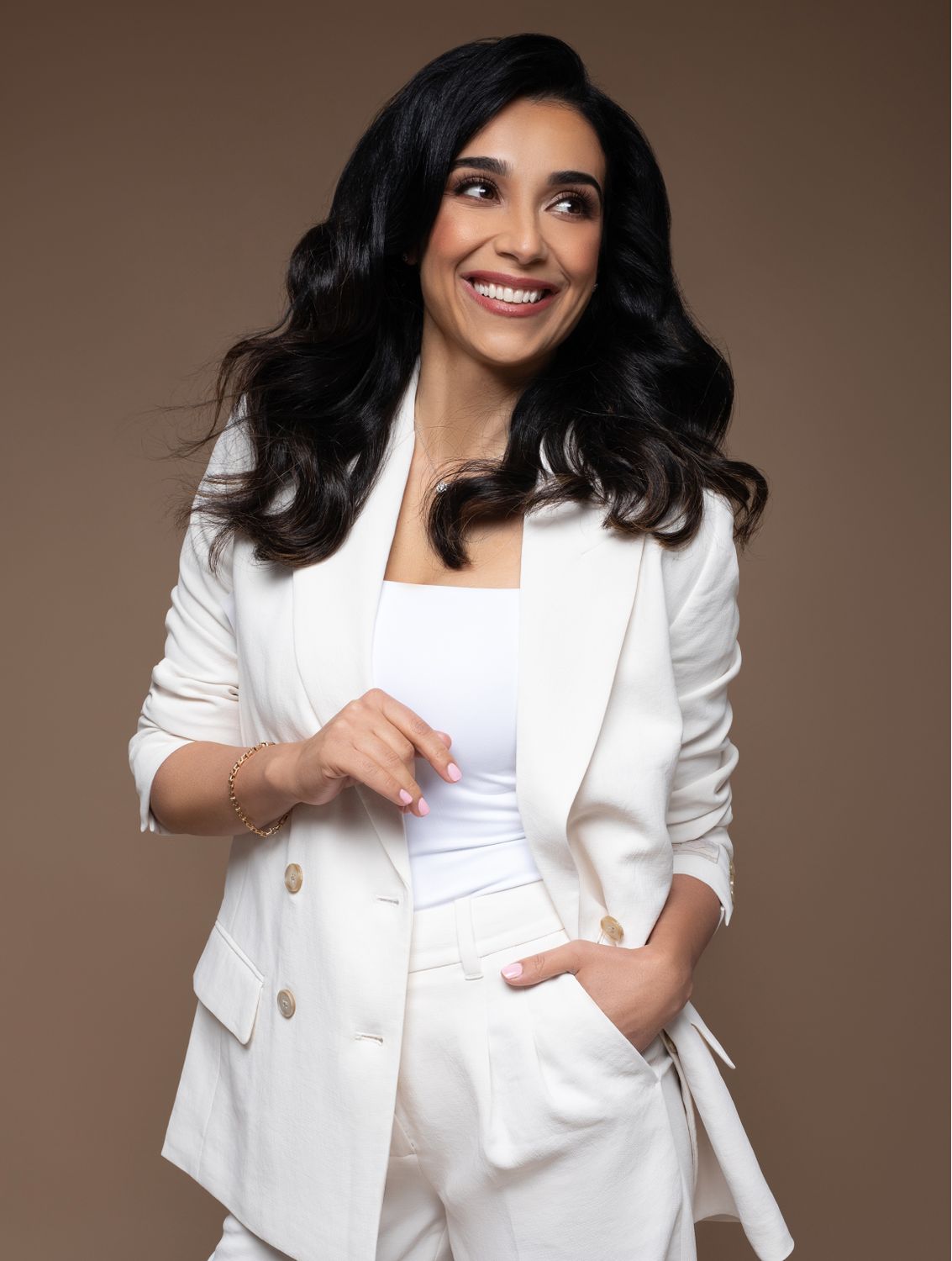
Dr. Anali Dadgostar is a dual-fellowship trained Facial Plastic & Reconstructive Surgeon and rhinoplasty specialist with extensive experience in primary, revision, cosmetic, and functional rhinoplasty.
Her advanced training in both Facial Plastic Surgery and Rhinology gives her a comprehensive understanding of the nose as both an aesthetic structure and a functional airway.
Dr. Dadgostar takes a highly individualized approach to rhinoplasty. She considers the nose within the context of the entire face, with an emphasis on proportion, balance, structural integrity, and natural-looking results.
Rather than asking:
“What should this nose look like?”
She asks:
“What should this nose look like on you?”
Ethnic rhinoplasty uses many of the same surgical principles and techniques as other rhinoplasty procedures. The difference is the individualized consideration given to your ethnic background, anatomy, facial proportions, skin characteristics, and aesthetic goals.
There is no single technique or surgical result that defines ethnic rhinoplasty.
Rhinoplasty should be based on your preferences. Some patients want to maintain distinctive characteristics of their nose, while others want more substantial refinement.
Dr. Dadgostar's goal is to understand what you want to preserve as well as what you want to change.
No.
There is significant variation within every ethnic group. Two patients with the same ethnic background may have completely different anatomy and completely different aesthetic goals.
Your rhinoplasty should be designed around your nose and your face, not a category.
Yes.
Rhinoplasty can address both cosmetic and functional concerns. If structural problems such as a deviated septum, nasal valve narrowing, or other causes of obstruction are present, these can be evaluated and addressed as part of your surgical plan.
Natural-looking results are a central part of Dr. Dadgostar's rhinoplasty philosophy.
The goal is to create a nose that complements your facial proportions rather than appearing overly sculpted or surgically altered.
Most rhinoplasty procedures take approximately 2–4 hours, depending on the complexity of the surgery and the techniques required.
You will see an immediate change in the shape of your nose, but swelling will gradually decrease over time.
Most of the visible healing occurs during the first several months, while subtle swelling and refinement—particularly at the tip—can continue for 12 months or longer.
Yes.
If you have difficulty breathing or structural problems within the nose, functional and cosmetic concerns can often be addressed during the same procedure.