Whether you're considering cosmetic rhinoplasty, functional rhinoplasty to improve breathing, revision rhinoplasty, or a nose job for aesthetic reasons, the surgeon you choose will have a great influence on your final result.
The nose is one of the most technically demanding structures in facial plastic surgery. It sits at the centre of the face, shaping facial balance, influencing how the eyes are perceived, and playing a critical role in breathing. Even subtle changes can alter the harmony of the entire face. That is why rhinoplasty is as much about judgment as it is technique. The best results rarely look like surgery. They blend seamlessly with your existing features, enhancing your appearance without changing your identity. When performed well, rhinoplasty doesn't create a different face — it creates a more balanced version of the one you already have.
Achieving that kind of result requires years of specialized training, experience, and sound surgical judgment, which is why choosing the right surgeon matters more than any other decision you will make during the process. In this guide, you'll learn what actually matters when choosing a rhinoplasty surgeon in Vancouver, the questions you should ask during a consultation, and how to determine whether a surgeon's experience and approach are the right fit for you.


Some complete residency in Plastic Surgery. Others complete residency in Otolaryngology–Head and Neck Surgery (ENT). Both are fully qualified surgical specialties, but they emphasize different aspects of anatomy and reconstruction. More important than the specialty itself is how much of a surgeon's training and practice is devoted specifically to rhinoplasty and the nose.
Many surgeons then pursue fellowship training — an additional period of highly specialized education completed after residency. A fellowship allows a surgeon to focus on a narrow area of expertise beyond what is learned during standard specialty training. For patients considering rhinoplasty, Facial Plastics and Reconstructive Surgery fellowship training represents an additional level of focused education and experience. It also reflects a deliberate decision to focus exclusively on one area of surgery and develop a deeper level of expertise.
Dr. Dadgostar completed residency in Otolaryngology–Head and Neck Surgery before pursuing not one, but two fellowships. Her first fellowship was in Facial Plastic and Reconstructive Surgery, devoted exclusively to cosmetic and reconstructive procedures of the face.
Her second fellowship in Rhinology at the University of British Columbia, focused on the complex anatomy, physiology, and surgery of the nose and paranasal sinuses.
This combination of training is uncommon. It provides years of focused education dedicated specifically to the nose — from facial aesthetics and surgical technique to the intricate anatomy and structural principles that support natural-looking, long-lasting results.
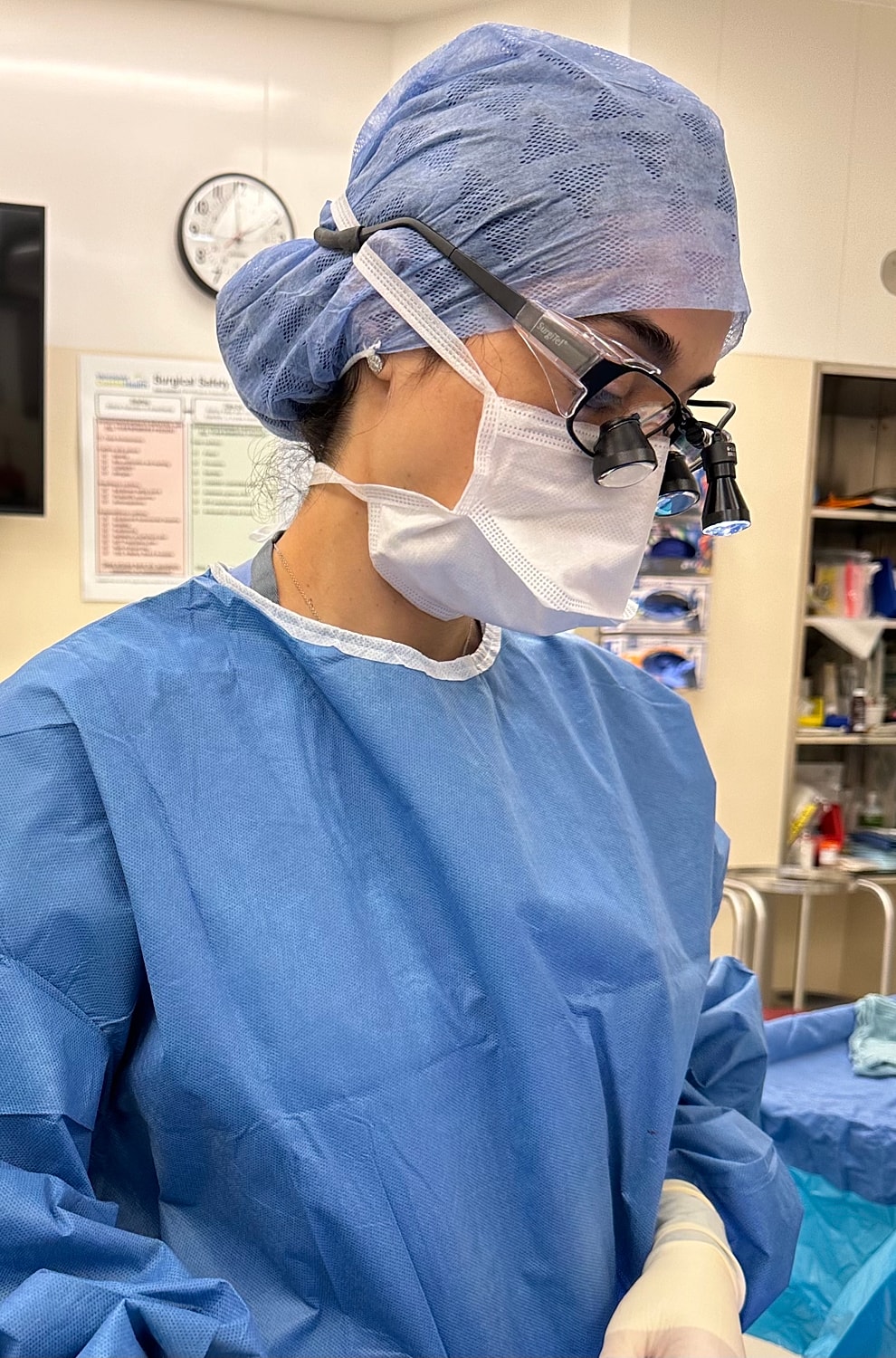
A surgeon who performs rhinoplasty weekly develops an intuitive understanding of how different nasal tissues respond — how skin thickness affects tip definition, how cartilage quality determines what's achievable, and how the final result continues to evolve over the twelve months or more after surgery. Experience also develops surgical judgment: knowing what should be changed, what should be preserved, and when less surgery produces the better result. When evaluating a rhinoplasty surgeon, ask directly: how many rhinoplasties do you perform each year? A surgeon who performs 100 annually has a fundamentally different level of experience from one who performs 20, even if their credentials look identical on paper.
Dr. Dadgostar has one of the highest-volume rhinoplasty practices in British Columbia, performing hundreds of nose surgeries each year. This breadth of experience includes cosmetic rhinoplasty, functional nasal surgery, and revision rhinoplasty.
Many patients seeking rhinoplasty also have functional concerns that affect breathing. A deviated septum, narrowed nasal valves, or other structural problems are frequently corrected during the same operation. Dr. Dadgostar routinely addresses both cosmetic and functional concerns in a single procedure, allowing patients to improve both the appearance and function of their nose in a single operation.
Every rhinoplasty surgeon will show you before and after photos. The value isn't simply in seeing beautiful results — it's in knowing how to evaluate them.
Start by looking at volume and variety. A large gallery featuring patients with different ages, ethnicities, skin thicknesses, and nasal anatomy suggests broad experience. Look for patients whose nose resembles your own, and pay attention to when the after photos were taken. Results at one week or even one month can look dramatically different from the final outcome. Whenever possible, ask to see fully healed results taken at least one year after surgery.
In Dr. Dadgostar's gallery, one feature stands out: no two noses look the same. Every rhinoplasty is individualized to the patient's anatomy, facial proportions, and goals. A masculine nose should retain masculine characteristics. A feminine nose follows different aesthetic principles. The objective is never to create the same nose on repeat — it's to create the right nose for each individual patient.
You'll also see patients who wanted only a subtle change. Some simply wished to reduce a dorsal hump while preserving the overall character of their nose. Others wanted refinement of the nasal tip without changing their profile. The best rhinoplasty is not the one that reflects a surgeon's signature style — it's the one that achieves the patient's goals while maintaining a natural, balanced appearance.
A rhinoplasty consultation is where you assess the surgeon as much as they assess you. The quality of that conversation — how carefully they listen, how honest they are about what's achievable, whether they understand what you actually want — tells you more than credentials alone.
Dr. Dadgostar begins every consultation by understanding what the patient hopes to achieve. Every nose — and every patient's goals — are different. Some patients want a comprehensive rhinoplasty, while others want only a single concern addressed, such as reducing a dorsal hump or refining the nasal tip. There is no single "correct" operation. The goal is to understand exactly what the patient wants to change — and just as importantly, what they want to preserve. The surgical plan is tailored to the patient's anatomy, priorities, and desired outcome, not a one-size-fits-all aesthetic.
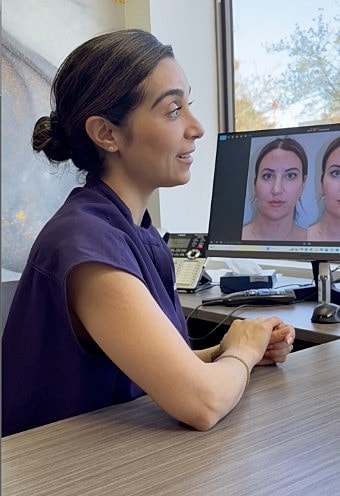
Digital imaging is then used to create a realistic simulation of the proposed result. Although no imaging system can guarantee the final outcome, it is one of the most valuable communication tools in rhinoplasty. It allows patients to confirm that the proposed changes align with their expectations, ask questions, and refine the surgical plan before proceeding.
Vancouver is one of Canada's most ethnically diverse cities, and that diversity is reflected in the patients seeking rhinoplasty. Many are looking for ethnic rhinoplasty — a highly individualized approach that respects the unique anatomy and aesthetic characteristics of different ethnic backgrounds. If you are considering ethnic rhinoplasty, ask your surgeon about their experience with patients who have anatomy similar to yours, and request to see relevant before and after photos.
Some patients also consider travelling elsewhere in Canada, the United States, or overseas for rhinoplasty. While excellent surgeons practice around the world, rhinoplasty is not a one-time event. Healing continues for approximately one year or more, with multiple follow-up visits to monitor progress and address any concerns that arise. Choosing a local surgeon makes ongoing care, management of unexpected issues, and access to revision surgery — should it ever be needed — far simpler throughout the recovery process.
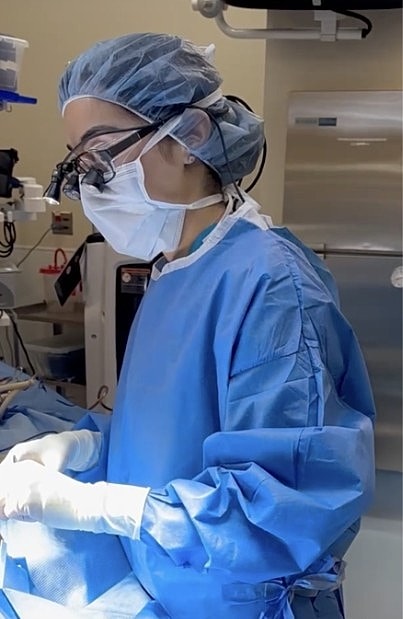
Choosing a rhinoplasty surgeon isn't about finding someone who can perform the operation. It's about finding someone whose training, experience, surgical judgment, and aesthetic philosophy align with your goals.
A consultation isn’t a commitment to surgery. It’s an opportunity to understand your anatomy, discuss your goals, and determine whether Dr. Dadgostar’s approach is the right fit for you.
If you're considering rhinoplasty in Vancouver, Dr. Dadgostar offers comprehensive consultations, advanced digital imaging, and an individualized surgical plan designed around your anatomy — not a one-size-fits-all result.
Book a consultation to discuss your goals, review what's realistically achievable, and decide whether her approach is the right fit for you.
Yes. "Nose job" is the everyday term for rhinoplasty. Both refer to surgery that changes the appearance of the nose, improves breathing, or addresses both cosmetic and functional concerns during the same procedure.
Cosmetic rhinoplasty changes the appearance of the nose, including its shape, size, profile, or tip. Functional rhinoplasty corrects structural problems that affect breathing, such as a deviated septum or collapsed nasal valves. Many patients benefit from addressing both during the same operation.
Open rhinoplasty uses a small incision across the columella to provide direct access to the nasal framework. Closed rhinoplasty is performed through incisions hidden inside the nostrils. The appropriate technique depends on your anatomy and surgical goals rather than surgeon preference.
Good candidates are in good general health, have concerns about the appearance or function of their nose, and have realistic expectations about what surgery can achieve. The best way to determine whether rhinoplasty is appropriate is through a comprehensive consultation.
A well-performed rhinoplasty should complement your facial features rather than draw attention to itself. The goal is to create a nose that looks as though it naturally belongs on your face while preserving your individual character and identity.
Yes. Many patients have structural problems such as a deviated septum, narrowed nasal valves, or other anatomical issues that contribute to nasal obstruction. These problems can often be corrected during the same procedure as cosmetic rhinoplasty.
Most patients wear a nasal splint for approximately one week. Bruising and swelling improve substantially within two to four weeks, allowing most people to return to work and normal social activities. The nose continues to refine over the following twelve months, particularly around the tip.
Although the bones and cartilage heal relatively quickly, the overlying soft tissues and skin continue to settle for many months. Swelling resolves gradually, which is why the final result — particularly at the nasal tip — may not be fully apparent for approximately one year or more.
The cost of rhinoplasty depends on the complexity of the procedure, whether functional surgery is required, and the associated facility and anesthesia fees. A personalized quotation is provided after consultation. When surgery is performed to correct medically necessary breathing problems, portions of the procedure may be covered by provincial health insurance.
Revision rhinoplasty is surgery performed to improve the appearance or function of a nose following a previous rhinoplasty. Because of scar tissue, altered anatomy, and limited cartilage availability, revision rhinoplasty is generally more complex than primary rhinoplasty and should be performed by a surgeon with significant experience in nasal reconstruction.
A consultation is your opportunity to evaluate the surgeon as much as the surgeon evaluates you. Consider asking:
An experienced rhinoplasty surgeon should answer these questions clearly and confidently. By the end of your consultation, you should feel that your surgeon understands your goals, has explained what is realistically achievable, and has developed a surgical plan tailored specifically to your anatomy.
Look for a surgeon with dedicated training in rhinoplasty, a high-volume rhinoplasty practice, extensive before and after results, and an aesthetic approach that aligns with your goals. Your consultation should leave you feeling that your surgeon understands your concerns, has realistic expectations, and has developed a surgical plan tailored specifically to your anatomy.
Dr. Dadgostar is a dual fellowship-trained facial plastic and reconstructive surgeon with advanced training in both cosmetic rhinoplasty and the functional anatomy of the nose. Her high-volume rhinoplasty practice includes cosmetic, functional, and revision rhinoplasty. Every consultation includes advanced digital imaging and a personalized surgical plan tailored to each patient’s anatomy, goals, and facial features.
In addition to rhinoplasty, Dr. Dadgostar performs many facial procedures including blepharoplasty (eyelid surgery), chin augmentation, otoplasty, lip lift, and non-surgical facial treatments such as Botox and dermal fillers. Dr. Dadgostar sees patients from Vancouver, the Lower Mainland, Vancouver Island, and other areas of BC as well as those outside of the province. Patients considering rhinoplasty or a nose job are welcome to book a consultation.